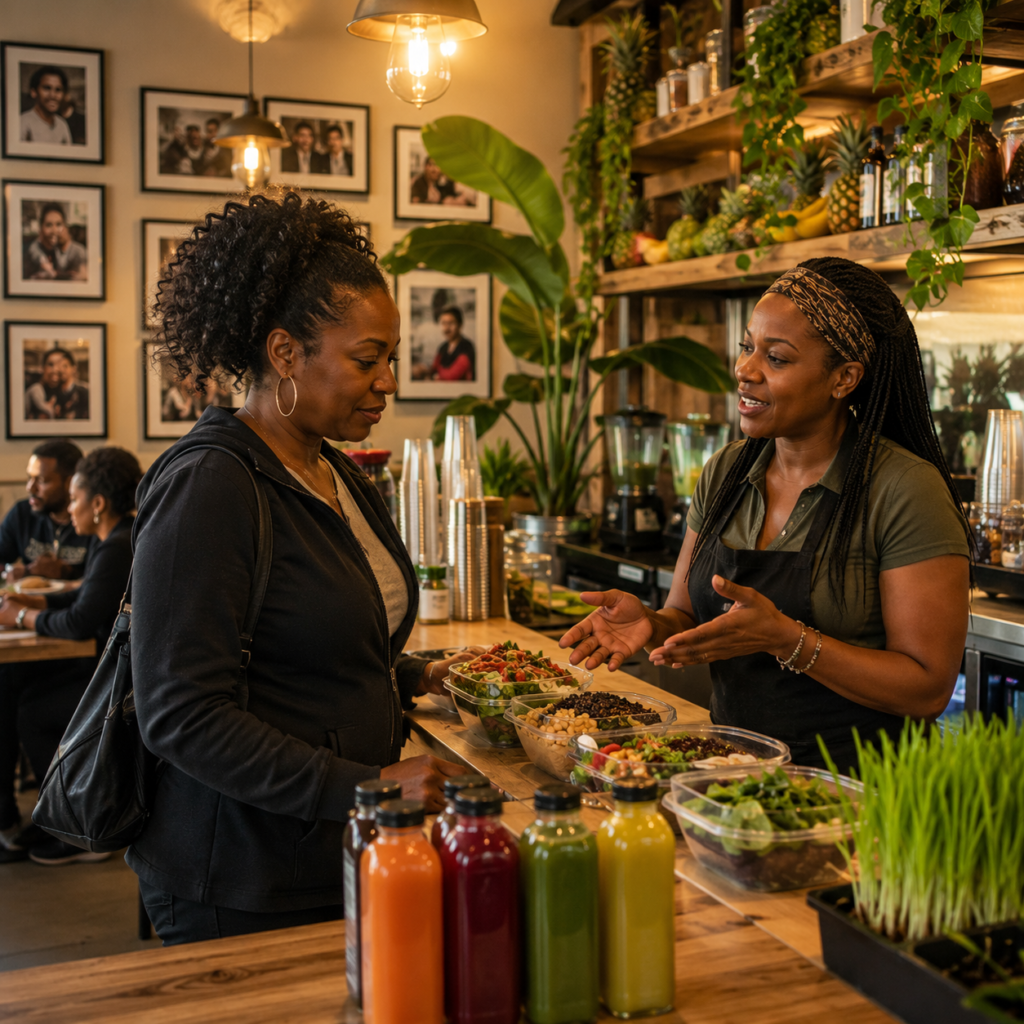

Walking down a neighborhood street or scrolling through your phone, have you ever noticed the glaring invisibility of Black-owned businesses? Despite their undeniable contributions to local economies and rich cultural legacies, these enterprises remain shadowed—trapped beneath algorithmic noise, overlooked in search results, and buried within fragmented directories. This invisibility isn’t just a digital challenge; it’s an economic one that reverberates through community wealth-building, generational prosperity, and neighborhood sustainability.
Black entrepreneurship is more than a business model—it’s a movement toward self-determination, a vessel for generational wealth, and a foundation for community resilience. Yet, without visibility—the ability to be found, trusted, and chosen—these businesses face an uphill battle that extends far beyond marketing into the core of economic survival. Visibility means connection: to customers ready to support, to networks that provide capital, and to communities hungry for local revival.
This layered experience of invisibility and economic exclusion is not accidental but systemic, reflecting deep disparities in resource access, representation, and technological inclusion. But it is within this challenge that a profound opportunity emerges: by reclaiming visibility through culturally connected digital strategies, neighborhood-level commerce, and community-aligned economic infrastructure, Black-owned businesses have the power to reclaim narrative space and secure thriving ecosystems that nourish generations.
As a trusted platform dedicated to increasing visibility for Black-owned businesses, Black Pages International understands that discoverability is not simply a marketing advantage—it is an economic necessity. By helping consumers find, verify, and support Black-owned businesses across communities, Black Pages International plays a critical role in strengthening local commerce, building digital trust, and advancing long-term economic empowerment.
Why Black-Owned Businesses Remain Hidden in the Digital Era
Finding a Black-owned business can sometimes feel like searching for a relic rather than a thriving enterprise. The growth statistics tell a story of rapid expansion-over 194,000 Black-owned firms employing millions and driving billions in revenue.Yet, their representation in online searches and directories rarely matches their economic footprint. Why?
It is a digital discoverability gap layered by factors ranging from inconsistent business data, lack of verified ownership credentials, to opaque algorithmic biases that favor well-funded, established enterprises or national chains. Many Black entrepreneurs wrestle with limited access to technical resources and marketing budgets, leaving their businesses undocumented or misrepresented in local maps and search engines.
The problem worsens as platforms overload search results with ads, chains, or unverified listings. Community members searching for “Black-owned restaurants near me” or “minority-owned beauty salons in my neighborhood” frequently encounter outdated or irrelevant results. The disconnect represents lost opportunity—not just for the businesses trying to grow, but for the community’s cultural fabric and economic ecosystem.
Yet, this visibility gap is not immovable. It calls for intentional infrastructure that centers Black-owned businesses in search, uses culturally authentic marketing, and embraces transparency through verification initiatives. Digital trust becomes as important as digital presence; customers want authenticity confirmed as much as they want ease of discovery.
How Black Pages International Helps Close the Visibility Gap
Black Pages International was created to address one of the most persistent challenges facing Black entrepreneurs i.e. being found by the people who are actively searching for them. In today’s digital economy, visibility determines whether a business is discovered, trusted, and chosen.
By creating a centralized space for Black-owned businesses, Black Pages International helps bridge the gap between business owners and consumers who want to support them. This kind of platform is especially important because many Black-owned businesses are often scattered across disconnected directories, outdated listings, or search results that fail to accurately reflect ownership and community relevance.
Black Pages International brings expertise to this space by focusing on:
- Verified visibility: Helping consumers confidently identify and support Black-owned businesses.
- Digital discoverability: Making it easier for businesses to appear where customers are already searching.
- Community-centered commerce: Encouraging dollars to circulate within local and global Black communities.
- Business storytelling: Giving entrepreneurs a platform to share their mission, services, and cultural impact.
- Economic empowerment: Supporting the broader goal of turning visibility into revenue, trust, and long-term growth.
This work positions Black Pages International as more than a directory. It serves as a visibility partner, community resource, and economic empowerment platform for Black entrepreneurs and the communities that support them.
Local Economic Circulation: The Power Behind Neighborhood-Centered Commerce
The economic vitality of Black neighborhoods hinges not only on who owns businesses but on how money flows within the community. Local economic circulation—the reinvestment of dollars within a neighborhood—fuels job creation, neighborhood services, and social stability. Every dollar spent at a Black-owned business has a multiplier effect, sustaining other businesses and circulating wealth in a way that chains or external investors rarely replicate.
Yet, with Black-owned businesses underrepresented in visible marketplaces and online directories, the community’s buying power leaks outside local borders. The failure to harness local circulation can deepen neighborhood economic decline, impacting schools, housing, and infrastructure.
Curated neighborhood-based discovery platforms and localized SEO strategies bridge this gap. By spearheading “Black-owned business near me” guides, neighborhood hubs, and social commerce initiatives, cities like Chicago transform intention into action—making it easier to find, support, and share local enterprises. These tools offer not just listings but narratives that tie businesses to cultural identity and community history, creating deeper emotional resonance and shifting consumer behavior toward sustained local patronage.
A key to this is an ecosystem mindset. When Black entrepreneurs, consumers, and community organizations align around localized commerce, the economic landscape shifts from transactional to transformational.
Entrepreneurship Barriers: The Underlying Challenges Shaping Business Ownership and Visibility
Behind every Black-owned storefront or service lies a complex matrix of systemic barriers that affect not just financial access but digital presence itself. This includes:
- Capital Access: Traditional financing remains elusive, with many Black entrepreneurs labeled as “unbankable” despite profitability. Grants and micro-loans offered are often insufficient or come with prohibitive conditions. Without adequate cash flow, investments in SEO, digital marketing, and technology are minimal or nonexistent.
- Representation and Verification: The inconsistent or absent verification of Black ownership means businesses struggle to prove authenticity to both directories and consumers. This fuels skepticism and complicated searches.
- Technical Literacy and Support: Many entrepreneurs lack the time, resources, or guidance to navigate SEO best practices, addressing AI search algorithms, and digital trust-building—areas dominated by steep learning curves or costly consulting.
- Algorithmic Bias: Automated systems powering search and social feeds often deprioritize smaller, minority-owned businesses because they have less advertising spend or user engagement signals, perpetuating invisibility.
- Marketing Fatigue: Constant self-promotion without corresponding visibility leads to burnout, where the exhaustive effort to be seen diminishes the entrepreneur’s creative and operational energy.
Addressing entrepreneurship barriers demands more than encouragement. It requires ecosystem-oriented investments that provide accessible capital, technical training, ownership verification frameworks, and direct pipeline access to discoverability tools.
Digital Discoverability Gaps: Why Most Black-Owned Businesses Don’t Show Up “Near Me”
“Near me” searches embody current consumer behavior—seeking convenience, trust, and immediacy. But for Black-owned businesses, gaps in digital discoverability stem from how search engines index, categorize, and surface entities. Inconsistent business names, conflicting addresses, lack of real-time updates, and sparse online reviews all contribute to invisibility:
- Many Black-owned businesses operate in service industries or retail sectors underserved by mainstream directories.
- Disparities in social proof—fewer routine reviews compared to chain counterparts—hinder algorithmic favor.
- Lack of structured data markup and detailed profiles suitable for AI and semantic search weaken visibility.
- Directory platforms often rely on outdated manual submissions or don’t verify ownership reliably, making businesses hard to identify as genuinely Black-owned.
Closing these gaps means prioritizing verified local directories, educating entrepreneurs on digital tools like Google Business Profiles, and optimizing listings with neighborhood tags, consistent branding, and ongoing engagement.
Funding Disparities and Their Impact on Visibility and Growth
Capital fuels business growth; but for many Black entrepreneurs, it also fuels visibility. Marketing, SEO, and digital infrastructure require continuous investment, and funding disparities limit these opportunities. A business that can’t invest in a website optimized for AI search, or updated social media with verified tags, remains invisible even if it’s profitable or beloved locally.
Financial institutions and funding programs frequently have restrictive criteria that exclude emerging, community-rooted businesses. Meanwhile, debt-heavy financing models deter risk-taking in digital innovation. As a result, many owners operate on minimal margins, prioritizing daily operations over strategic visibility.
Community-based funding initiatives—from minority business development coalitions to crowdfunding targeted at Black-owned enterprises—are critical. These programs recognize that discoverability efforts must be valued components of growth and sustainability, not optional marketing extras.
Trust-Building Challenges: Beyond Visibility Lies Credibility
Visibility opens the door, but trust invites customers in. Black-owned businesses often face layered skepticism born from past experiences with misrepresentation, tokenized marketing, and fluctuating community loyalties.
Consumers want to know: Is this business really Black-owned? Are the products or services culturally authentic? Has the business earned community respect and digital trust?
Transparency in business ownership verification, honest storytelling, and clear communication about mission and ownership serve as trust pillars. False or performative “support Black-owned”
Build Visibility With Black Pages International
For Black-owned businesses, visibility is the first step toward growth, credibility, and lasting community impact. Black Pages International helps entrepreneurs strengthen their digital presence, reach intentional consumers, and become part of a larger ecosystem built around economic empowerment.
Whether you are a business owner looking to be discovered or a consumer committed to supporting Black-owned businesses, Black Pages International provides a trusted path toward connection, commerce, and community wealth.
Get listed with Black Pages International today and help make Black-owned business visibility the standard—not the exception.